McKinsey’s 10 IT-enabled trends for the decade ahead

IT trends

Using social media to encourage breakthrough thinking is among the top 10 IT trends identified by McKinsey. Image from 52ltd.com/blog.

Last week, I wrote about the McKinsey Global Institute’s list of 12 most disruptive technologies; this week, I want to look at a companion piece from McKinsey: “Ten IT-enabled business trends for the decade ahead.”

The pace of information technology change, innovation and business adoption over the last few years “has been stunning,” McKinsey says. “Consider that the world’s stock of data is now doubling every 20 months; the number of Internet-connected devices has reached 12 billion; and payments by mobile phone are hurtling toward the $1 trillion mark.”

Two trends identified in previous McKinsey research have reached the point where they are now competitive necessities for most companies: big data and advanced analytics. In addition, McKinsey notes three trends that marketers are familiar with but are now expanding across organizations: the integration of digital and physical experiences to create new ways to interact with customers; the demand for products that are free, intuitive and radically user oriented; and the rapid evolution of IT-enabled commerce.

Without further ado, here are McKinsey’s top 10 IT trends:

  1. Joining the social matrix. Social media are more than a consumer phenomenon, says McKinsey. They connect many organizations internally and increasingly reach outside their borders, “tapping the brain power of customers and experts from within and outside the company for breakthrough thinking.”
  2. Competing with ‘big data’ and advanced analytics. The volume of global data now doubles at a pace faster than every two years, McKinsey reports, and the power of analytics is rising as costs are falling. Marketers are already assembling data from real-time monitoring of blogs, news reports and tweets to “detect subtle shifts in sentiment that can affect product and pricing strategy.”
  3. Deploying the Internet of all things. Tiny sensors and actuators are proliferating at astounding rates. Over the next decade, according to McKinsey, these sensors could potentially link over 50 billion physical entities! Uses range from managing production and distribution to new ways of monitoring our health through apps and ingestible sensors. Yum!
  4. Offering anything as a service. The shift toward cloud-based IT services has made possible new opportunities in the consumer market such as companies renting idle vehicles by the day or hour or renting unused space on a short-term basis. There are now online services where you can rent everything from designer clothes and handbags to textbooks.
  5. Automating knowledge work. “[A]dvances in data analytics, low-cost computer power, machine learning and interfaces that ‘understand’ humans are moving the automation frontier rapidly toward the world’s more than 200 million knowledge workers,” according to McKinsey. Examples range from computers that help attorneys sift through thousands of legal documents for pretrial discovery to supercomputers able to assist oncologists with cancer diagnoses and treatments.
  6. Engaging the next 3 billion digital citizens. Rising incomes and less expensive mobile devices mean that large numbers of citizens in developing nations are becoming wired. The growth potential is huge, McKinsey says, with digital penetration in India at only 10 percent and in China 40 percent.
  7. Charting experiences where digital meets physical. The blurring of physical and virtual continues at a rapid pace, with more and more physical aspects of our world taking on digital characteristics. From Google Glass to wristwatch computers, interactive devices are changing the way we retrieve and use information.
  8. ‘Freeing’ your business model through Internet-inspired personalization and simplification. After nearly two decades of Internet browsing and purchasing, consumers expect services to be free, personalized and easy to use. Expectations of instant results, and superb and transparent customer service are now spilling into brick-and-mortar stores. As a result, businesses are forced to offer more services free or at lower cost.
  9. Buying and selling as digital commerce leaps ahead. Decreasing technology costs and fewer barriers to entry have allowed for more peer-to-peer e-commerce and new kinds of payment systems. For example, Airbnb connects travelers with people who have spare rooms to rent. Similar marketplaces are springing up for bicycles, cars and labor.
  10. Transforming government, healthcare and education. These three sectors make up about a third of global GDP but have lagged behind in productivity growth in part because they have been slow to adopt new technologies. However, governments are becoming more efficient, healthcare costs are being contained and education is being transformed through greater use of mobile and web-based applications.

What do these 10 trends mean for business leaders? According to McKinsey, here are the areas that organizations need to focus on:

  • Transparent and innovative business models,
  • Talent (particularly in the sciences and engineering),
  • Organization and
  • Privacy and security.
Posted in Management, Technology | Tagged , , , , , , | 4 Comments

Mobile Internet tops list of McKinsey’s disruptive dozen

Mobile devices

Image from jquerymobile.com

I am a big fan of the research that comes out of McKinsey & Company, and I’ve mentioned some of their work in previous posts. In May, they released two big trends pieces that I wanted to sink my teeth into right away. Well, here it is July, and I am just now getting to them.

Disruptive technologies: Advances that will transform life, business, and the global economy” is well worth downloading. In this piece, McKinsey’s researchers take a look at 12 “next-big-thing” technologies and assess their likelihood of “disrupting” the global economy over the next 10-15 years. The researchers’ goal: to cut through the “noise,” as they put it,  and “identify which technologies truly matter.”

After looking at more than 100 different promising technologies, they narrowed their list down to 12. Some of these you have probably read about, and some have already been with us for a while:

  1. Mobile Internet
  2. Automation of knowledge work
  3. Internet of things
  4. Cloud technology
  5. Advanced robotics
  6. Autonomous and near-autonomous vehicles
  7. Next-generation genomics
  8. Energy storage
  9. 3D printing
  10. Advanced materials
  11. Advanced oil and gas exploration and recovery
  12. Renewable energy

McKinsey calculated the economic value at stake for each of these technologies, looking at such factors as speed of adoption, scope and cost. Here are just a few of McKinsey’s “gee-whiz” numbers:

  • $5 million vs. $400 – Price of the fastest supercomputer in 1975 vs. an iPhone 4 with equal performance
  • 230+ million – Knowledge workers in 2012
  • 300,000 – Miles driven by Google’s autonomous cars with only one accident (human error)
  • 3x – Increase in efficiency of North American gas wells between 2007 and 2011

Then here is the corresponding economic potential of these technologies:

  • 2-3 billion – More people with access to the Internet in 2025
  • $5-7 trillion – Potential economic impact by 2025 of automation of knowledge work
  • 1.5 million – Driver-caused deaths from car accidents in 2025, potentially addressable by autonomous vehicles
  • 100-200% – Potential increase in North American oil production by 2025, driven by hydraulic fracturing and horizontal drilling

Mobile Internet remains one of  the most disruptive technologies out there. It’s hard to believe the first iPhone was introduced just six years ago and the first iPad only three years ago. According to McKinsey:

In just a few years, Internet-enabled portable devices have gone from a luxury for a few to a way of life for more than 1 billion people who own smartphones and tablets. In the United States, an estimated 30 percent of Web browsing and 40 percent of social media use is done on mobile devices; by 2015, wireless Web use is expected to exceed wired use. Ubiquitous connectivity and an explosive proliferation of apps are enabling users to go about their daily routines with new ways of knowing, perceiving, and even interacting with the physical world. The technology of the mobile Internet is evolving rapidly, with intuitive interfaces and new formats, including wearable devices. The mobile Internet also has applications across businesses and the public sector, enabling more efficient delivery of many services and creating opportunities to increase workforce productivity. In developing economies, the mobile Internet could bring billions of people into the connected world.

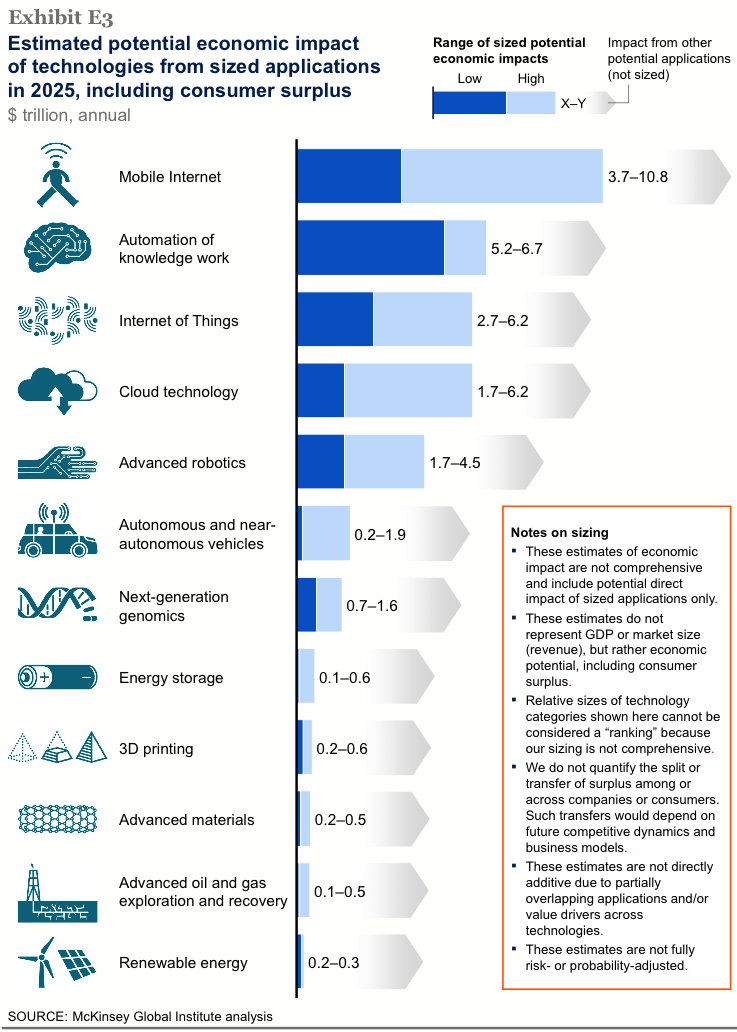
Drum roll…here is perhaps the most useful chart from the report (although the report is chock-full of nuggets). It shows just how disruptive these technologies will potentially be in 2025. (Click on the chart to see a bigger, reader-friendly version).

Disruptive technologies

In my next post, I’ll take a look at McKinsey’s companion report, “Ten IT-enabled business trends for the decade ahead.”

Posted in Technology | Tagged , , , , , , | 2 Comments

‘The only thing we have to fear is fear itself’

Ever since eighth-grade history class, when I first encountered those famous words by FDR, I’ve wondered about their meaning. How could you fear fear? I just didn’t make sense to me.

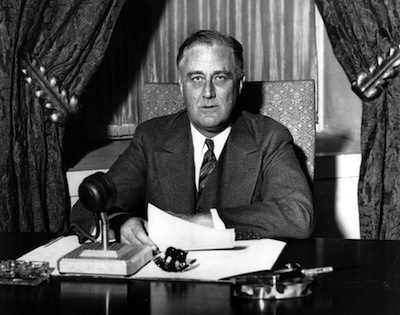
FDR fireside chat

FDR tried to calm a jittery nation in his first inaugural address and subsequent fireside chats. Image from kirbymuseum.org.

Then along comes life—a few hard knocks, some doubts and setbacks—and pretty soon I’m seeing that FDR was right. If you’re not careful, fear can stop you dead in your tracks.

At one time in our evolution, fear was of great benefit in ensuring our survival. I suppose today it still is. The fear of heights keeps us from jumping off tall buildings, and the fear of death keeps us from doing really stupid things. There are myriad smaller fears like the fear of looking silly in public, the fear of failing a test or choking in a game. Some of our fears have vanity at their root; others push us to make positive changes in our lives.

But fear itself, when it isn’t harnessed for good, when it smothers our self-confidence and extinguishes our desire to excel, when it stops us from doing what we know is right, even bettering the world—now that is fear that should be feared. That kind of fear needs to be eradicated like a disease so it can no longer infect us.

Anyone who has tried to better his situation, make a career change or start a new business knows about fear. Like a bad penny, fear keeps turning up. It’s fear that convinces you that you will fail. “You’re not smart enough or talented enough,” fear says. “Stop wasting your time, you’ll never get that job or win that contract.”

Fear begets fear, and pretty soon you don’t think you can do anything except what you’ve always done, and that’s not acceptable either because what you’re doing now is the very thing you want to change. It becomes a vicious cycle unless you can find the strength to change your attitude.

Overcoming fear has become a cottage industry with self-help books, life coaches, videos and motivational speakers. It does seem that we humans have a need to be constantly reassured that we are okay and with a little nudging we can succeed. Or wildly succeed, if you believe some of the books out there.

One book that’s been around for decades is Napoleon Hill’s 1937 classic, “Think and Grow Rich.” I want to thank my friend Nate Felton for convincing me to finally sit down and read it. Hill is considered one of the progenitors of self-help, perhaps the original self-help guru.

It won’t surprise you that Hill devotes the final chapter of his book to “outwitting the six ghosts of fear.” Typical of Hill’s writing, he breaks fear down into the basic types of fear we should strive to overcome. In his inimitable style, Hill discusses how the “unholy trio” of fear, indecision and doubt work together to sabotage our dreams and aspirations. “Where one is found,” he says, “the other two are close at hand.” “INDECISION is the seedling of FEAR,” and “indecision crystallizes into DOUBT,” he writes. “[T]he two blend and become FEAR.”

The six basic fears are timeless and include:

  1. Fear of poverty
  2. Fear of criticism
  3. Fear of ill health
  4. Fear of loss of love of someone
  5. Fear of old age
  6. Fear of death

How many of these can you identify with? Why not vow to eradicate them from your life? You have nothing to fear…but fear itself.

P.S. Here’s an excerpt from Hill’s chapter on fear. This will give you a taste of his writing style, which is absolutely marvelous:

This fear [of poverty] paralyzes the faculty of reason, destroys the faculty of imagination, kills off self-reliance, undermines enthusiasm, discourages initiative, leads to uncertainty of purpose, encourages procrastination, wipes out enthusiasm and makes self-control an impossibility. It takes the charm from one’s personality, destroys the possibility of accurate thinking, diverts concentration of effort, it masters persistence, turns the will-power into nothingness, destroys ambition, beclouds the memory and invites failure in every conceivable form; it kills love and assassinates the finer emotions of the heart, discourages friendship and invites disaster in a hundred forms, leads to sleeplessness, misery and unhappiness–and all this despite the obvious truth that we live in a world of over-abundance of everything the heart could desire, with nothing standing between us and our desires, excepting lack of a definite purpose.

Posted in Entrepreneurship, Staying motivated | Tagged , , , , , , | 2 Comments

Jefferson, revolution and independence

I had the good fortune of attending the University of Virginia, a school with many traditions associated with its celebrated founder Thomas Jefferson. It’s “Mr. Jefferson’s University,” and his presence is still felt in the “academical village” he created in Charlottesville.

Thomas JeffersonOn Independence Day, it’s good to think about Jefferson and the other founders of our nation. It’s good to think about change and revolution. The quote “every generation needs a new revolution” is often attributed to Jefferson, although it’s not clear that he really said it. He did say, in a letter written from Paris in 1787, that “the tree of liberty must be refreshed from time to time with the blood of patriots and tyrants.” In essence, he was defending the American Revolution, suggesting that the lives lost in the pursuit of freedom were worth it.

The final sentence of the Declaration of Independence is a promise by the signers to “mutually pledge to each other our Lives, our Fortunes, and our Sacred Honor.” The 52 individuals who made that pledge were willing to pay the ultimate price if necessary. It’s that sacrifice that we reflect upon today.

How many of us would be willing to sign a similar pledge? I think I might be tempted to call in sick the day the declaration went around the office, or say, “Let me think about it. I’m not sure this is a good time for me to be making any major changes in my life.”

Of course, the time for signing such pledges passed 237 years ago, but that doesn’t mean each succeeding generation gets off the hook. We are the beneficiaries of our founding fathers’ brave resolve, and today we can “pay it back” by being engaged citizens. In other words, we should take advantage of and protect the independence previous generations have sacrificed to make possible for us.

We may not live in revolutionary times, but we can resolve to embrace change and live our lives to their fullest. As Jefferson said, “Our greatest happiness does not depend on the condition of life in which chance has placed us, but is always the result of a good conscience, good health, occupation, and freedom in all just pursuits.”

Happy Independence Day!

Posted in Happiness, Purpose | Tagged , , , , | 2 Comments

Watches, pocketknives and smartphones

Swiss Army iPhone

Hit “Like” if you would buy a Swiss Army iPhone. Image from technobuffalo.com.

It used to be that a watch and a pocketknife were the two most practical things a guy could carry (in addition to his wallet). Now days, it’s a smartphone.

I gave up wearing a watch about four years ago. Even when I had one on my wrist, I would instinctively reach for my BlackBerry to see what time it was. After all, I was checking my BlackBerry every five seconds, anyway. When the battery died in my watch—and I discovered that my local watch repair shop had gone out of business—I just kept putting off getting it replaced. Now my watch gathers dust on the dresser.

I used to carry a penknife, but 9/11 made possession of a sharp object a bit dicey, especially when you forgot to take it out of your pocket at the airport. The other day, I found a collection of old knives in a drawer—my Boy Scout knife, various pocketknives and a camping knife that has a fork and a spoon that fold out. I opened a box that contained a brand-new Swiss Army knife that I had received years ago. Hmm, I thought, I think I’ll start carrying this one around the house, and I slipped it into my pocket just like old times.

When you think about it, the smartphone is like a Swiss Army knife. Just when you thought there weren’t any more new things that could be added to a phone—wait, it’s a video recorder, a GPS, a flashlight—by golly, someone thinks of something new.

In the early days of cell phones, it was a real status symbol just to be seen with one. The first ones were about the size of those bulky walkie-talkies you see in World War II movies. As they slimmed down in size, strapping one to your belt was the “in” thing to do. A woman once said to me that it seemed to her that men displayed their phones like peacocks. She wondered if some men might be trying to compensate for their lack of size with a well-endowed phone. Just for the record, I did not own a cell phone at the time, so surely she could not have been speaking of me!

Later though, I did carry my BlackBerry in its official belt clip. I put it on every morning as if I were John Wayne strapping on my six-shooter. At meetings, I blended in with everyone else who excused himself during breaks to get his BlackBerry fix.

I got pretty fast at drawing my BlackBerry from its holster. Then I switched to an iPhone, and the holster look didn’t seem to suit me any more. Now I carry my phone in my pocket. This has required some rearranging of my pockets’ contents because I don’t like change or keys rubbing against my iPhone. All the more reason to add additional functionality to smartphones, like a retractable ballpoint pen, screwdriver or bottle opener.

I have to say, since I’ve switched to carrying my phone in my pocket, I don’t look at it as often. Reaching into my pocket requires work. The other day, I went through an entire dinner without looking at it. I’ve even been thinking about wearing my watch again. Wow!

So where do you carry your phone? Is it on your belt? In your pocket? In your purse? Or do you hand-carry your phone, plopping it down everywhere you go (only to later ask, “Has anyone seen my cell phone?”).

Posted in Technology | Tagged , , , , , | 5 Comments

Small Business Week, taxes and being ‘independent’

Image from kbkcommunications.com

Image from kbkcommunications.com

I meant to post this at the beginning of Small Business Week (June 16-22), but I was too busy being a small business.

I suspect most of the nation’s 28 million small businesses probably weren’t celebrating much this week either. Someone has to answer the phones, sell the product, run the reports or fill in for the person who called in sick. That’s the real-life story of mom-and-pop establishments rather than the “engines of capitalism, backbone of America” hyperbole we often hear out of Washington.

On Monday, the kickoff day of Small Business Week, I was driving to the post office to make sure my second-quarter, estimated income taxes were postmarked on time. How ironic, I thought, that the Small Business Administration would pick a tax day for self-employed people to begin its celebration. Uncle Sam is a funny guy.

Small Business Week is the kind of thing that Chambers of Commerce and business associations love. When I worked at the National Restaurant Association, we were plugged into all kinds of activities with the SBA. If you’re a PR guy, this is pure gold for proclamations, speeches and events.

The PR side of my brain lit up when I noticed that this is the 50th anniversary of National Small Business Week, started in 1963 by President Kennedy. Wow, I thought, nearly salivating, what I could do with that…

Back when I was writing press releases about how restaurateurs embody the true spirit of entrepreneurism, I had no idea what it takes to run a Main Street business. I have a hunch that is the case with most speechwriters who write Small Business Week remarks for their bosses.

So now that I’m “doing it,” now that I’m one of those vaunted entrepreneurs, how does it feel? Like Bob Dylan once opined, “How does it feel to be on your own, with no direction home, like a complete unknown, like a rolling stone?”

Some days it does feel like I’m a rolling stone. I would say that there is a definite gap between the rhetoric of free enterprise and its practice. Jay Morris Communications LLC is alive and kicking, but to say that I am an independent business person may be a stretch.

I am independent in that I have my own firm and rely on it for my income. But that income is not enough (yet) to fully sustain my lifestyle (i.e., pay all my bills). I’ve had to dip into my savings to cover my expenses.

The question I’ve been grappling with lately is how long do I pursue this adventure? At what point do I say, “That’s it, I’m pulling the plug”? My accountant, who has other small business clients, tells me it may take three to five years before I make a decent income. That’s a long time to be eating beans and hotdogs.

For now, I keep at it, convinced that with a few more projects, a big client or two, this thing could work! That’s the dream—that we all can succeed if we just put our minds to it and work hard enough. That’s what keeps me fired up, still.

So kudos to small businesses. Kudos to us because, as President Obama said this week, over half of all Americans work for a small business. Hug a small business owner today, and put those hotdogs on the grill!

Posted in Entrepreneurship, Staying motivated | Tagged , , , | 2 Comments

Aristotle, mentoring and the friends we choose

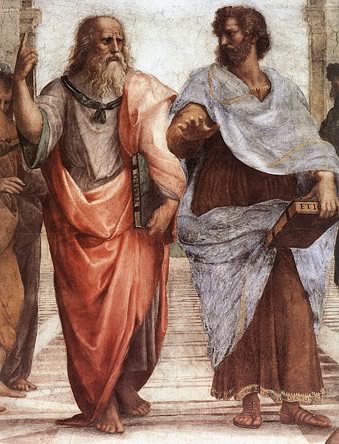
Plato and Aristotle

Aristotle’s mentor was Plato. Who’s yours? Seek out successful people to learn from. Image from outre-monde.com.

A few weekends ago, I was searching for something to read and found a slim volume by Peter Taylor that had been gathering dust on my shelf. Taylor was the gifted short-story writer and novelist who won a Pulitzer Prize for Fiction and taught at U.Va. when I was an undergraduate.

The book, “In the Tennessee Country,” was written in 1994, the year he died. It’s about a man obsessed with tracking down a cousin who has severed all ties with his family. It plumbs themes we have all grappled with in our own ways: separating ourselves from friends and family to start a new life, creating a new identity and escaping from the past.

At the end of the novel, the narrator finds his long-lost cousin, but with that discovery comes the cold realization of his own failed ambitions as an artist. The lesson, it seems, is that in order to move forward, we must let go and move on, no matter how painful that may seem.

I finished the book thinking of the ending of another novel, Joyce’s “A Portrait of the Artist as a Young Man,” where Stephen Dedalus also decides he must leave his old life behind to become a writer.

In real life, we make career and life decisions that, while not nearly as dramatic, are equally as important. It sounds trite, but “people, places and things” do make a difference. When we’re growing up, we have little control over our environment, but when we become adults we can make decisions about whom we choose to hang with, where to live and where to work. As the late Jim Rohn said, “You are the average of the five people you spend the most time with.”

The old adage about surrounding yourself with successful people is wise counsel. I recently came upon what I thought was sage advice for selecting three “essential people” in your life. In a post last month on Addicted2Success.com, Brenton Weyi describes the three types of people you should keep in your life at all times:

  1. A person who is older and more successful than you to learn from;
  2. A person who is equal to you to exchange ideas with; and
  3. A person below you to coach and keep you energized.

A great figure of history who embodied this principle was Aristotle. Aristotle was one of the greatest minds to ever grace this beautiful Earth, but this was only so because he was constantly challenging himself and working to refine his talents. He exchanged ideas with other Greek philosophers in the “Academy,” learned from his mentor Plato and taught a young boy named Alexander…who would later become Alexander the Great.

If you’re like me, you have plenty of people in your social and professional networks who fall into these three categories, but you probably haven’t consciously sought them out. I can think of times in my life when I definitely filled one or two of the essentials, but not all three at once.

Think about the benefits of learning, coaching and exchanging ideas—all at the same time! All three really are important, and will keep you motivated and on your toes. So why not resolve to seek out some essential people in your life? It might just make a difference!

Posted in Careers, Leadership | Tagged , , , , , , , | 7 Comments

How to manage difficult animals (and people)

Deer peeking in

Anything good in here to eat? Photo from pelorian.com.

I was surprised last week while visiting the Smokies that spring hasn’t quite “sprung” yet in the mountains. Trees at the upper elevations were just starting to leaf, resulting in beautiful, photo-op-friendly shades of green and copper on the mountainsides.

Back home, we are deep in the throes of spring, and that means young critters are invading our yards and gardens. Everywhere I go, it seems, baby rabbits are hopping across the landscape. And the day I returned, I spied a young deer lounging in my backyard, apparently enjoying the shade of a tree.

I have to confess, I’m a regular Elmer Fudd when it comes to rabbits and other creatures encroaching on my suburban space. There is no such thing as peaceful coexistence. Those wabbits and deer gotta go somewhere else. NIMBY is my mantra.

So what to do about difficult animals? And do the same strategies for managing difficult people apply to other mammals?

Before I left for the Smokies, I attended an IPRA luncheon on “Working with Difficult People and Difficult Clients” with Wendy Swire, an executive coach and mediator.

Wendy had us doing exercises at our tables, and one of them was to pair up with someone and talk about a recent experience with a difficult client. Interestingly, my partner and I described similar situations—clients who are annoyingly unresponsive. Very little communication. No direction as to where to go with a project.

Actually, not that dissimilar to having a deer look at you blankly when you inquire as to his intentions. No communication, no emails. No response to slamming the sliding glass door, making noise or the usual commotion that you hope will send him on his way.

Just “the stare.”

In fact, I would characterize my most recent four-legged visitor as downright difficult, like an insolent teenager. No budging him. The techniques Wendy taught us didn’t seem to be working:

  • Listen and focus on the problem, not the person. (Okay, I won’t demonize the deer.)
  • Don’t let the other person push your hot buttons. (Well, he’s on my lawn!)
  • Watch their body language and pay attention to nonverbals. (Hmm, just the stare is all we have to work with so far.)
  • Remain calm. (It’s all right. Deer are wonderful creatures.)
  • Show empathy. (Poor deer, no one wants you for a pet.)
  • Restate your feeling or content. (Will you please get off my lawn?)
  • Practice EQ (emotional intelligence). (I am so aware of my feelings right now that I could…”)

So how did you get rid of that deer?

Why, elementary, my dear Watson. I invited him to stay for dinner. He excused himself and trotted back into the woods.

Posted in Management | Tagged , , , , , | 2 Comments

‘Riding along in my automobile’

The view from Mount Mitchell, N.C., the tallest peak east of the Mississippi (accessible from the Blue Ridge Parkway).

The view from Mount Mitchell, N.C., the tallest peak east of the Mississippi (accessible from the Blue Ridge Parkway).

I recently took Augie, my 2006 Acura TL, on a road trip to the Great Smoky Mountains. We drove as far as Gatlinburg and then wandered up the Blue Ridge Parkway to Roanoke before heading back on 81. Augie performed like a champ, despite my riding him hard through the mountains. Back home, though, as I washed him up and noticed all those little nicks on his front bumper, I had to wonder: Is Augie getting old?

In a few months, Augie will turn 7. Just as Baby Boomers have redefined aging and retirement (60-year-olds acting like 40-year-olds), today’s cars seem to be lasting longer than yesterday’s models.

Judging from what I’ve read on car forums, Augie is just shy of middle age, which many now say is 80,000 to 100,000 miles. A well-maintained car might go another 100,000 miles after that, making 200,000+ the old age mark. That’s a lot better than the cars of my youth (my first car was a Chevrolet Vega), which tended to crap out well before their 10th birthday. So kudos to car manufacturers!

A bucolic Virginia scene from the Blue Ridge Parkway.

A bucolic Virginia scene from the Blue Ridge Parkway.

I learned while visiting the Biltmore Estate (just off the Blue Ridge Parkway near Asheville) that George Vanderbilt would buy his wife Edith a new luxury car every year. One of these cars is on display at the Biltmore’s winery. When you own the largest house in America (179,000 square feet on six floors), why not buy a new car every year?

I certainly luxuriated in Augie’s newness in the early years, and I’m still awed by his handsome leather interior (which I am a fanatic about keeping clean). Prior to Augie, I drove mostly “previously-owned” cars, frugally and stubbornly making them last beyond their prime. Augie was the antidote for all those years of parsimoniousness. His purchase was liberating. I actually splurged on myself for a change.

And now, he’s getting old. Sigh. As Milton observed, time is “the subtle thief of youth.” I guess Augie and I are destined to grow old together because I don’t see myself buying a new car anytime soon.

My consolation is that with age comes wisdom and a willingness to let go. Previously, I’m not sure I would have been willing to let Augie drive the Blue Ridge Parkway. I’ve been very protective of the Augster, and I’ve always tried to limit his long-distance outings. Lately, though, I’ve been easing up on those restrictions, throwing caution to the wind (heavens!).

So Augie may be allowed on more road trips, and that’s probably a good thing—for him and me.

Posted in Happiness | Tagged , , , , , , , , | 2 Comments