Judging the value of a college degree

“What’s worse than a bachelor’s degree in English?”

“A master’s degree in English.” Budda boom.

How would you rate the value of your degree?

Recently, Kiplinger’s Personal Finance ranked “the worst majors for your career.” Kiplinger looked at the likelihood of graduates finding employment in their field and came up with a “Top 10 List of Losers” (my words, not theirs).

At least English was not the absolute worst. Here is Kiplinger’s countdown of the 10 worst majors:

10 – English
  9 – Sociology
  8 – Drama and Theater Arts
  7 – Liberal Arts
  6 – Studio Arts
  5 – Graphic Design
  4 – Philosophy and Religious Studies
  3 – Film and Photography
  2 – Fine Arts
  1 – Anthropology

I can joke because I have a bachelor’s degree in English; and 20 years after I graduated, I went back to school part-time and earned a master’s degree in English.

Wouldn’t it have made sense at that point in my career to go for an MBA?

I say no. The Kiplinger list, and the thinking behind it, ignores one key factor: people are more successful doing what they like to do. Had I pursued an MBA, I would have been bored to tears. I wouldn’t have done well, and I would have cursed my decision every time I wrote a tuition check.

Instead, I decided to register for a graduate English course at George Mason University. About the only class I could fit into my schedule was something called “Freud and Lacan.” I remember calling the professor to ask what his class was all about. He tried to brush me off by saying, “This isn’t a class for beginners. You probably should find something else.” Ha, I thought, as I got off the phone. This is the class for me, and I signed up.

I loved it, and the professor and I soon became friends. One night he told me there was some scholarship money available and asked if I was interested. When I told him I wasn’t even in the program, he said, “You need to become one of us.” And so I did. I can’t tell you how much I enjoyed that experience—and how blissfully unconnected it was from my job at the time. It was right brain vs. left brain. It was yin and yang. It was challenging in such a refreshing way.

My advice to students is to major in what you like but also be very proactive about your career. While I may have majored in English, I probably spent more time writing for the student paper than I did studying. I landed a job on a community newspaper after I graduated, not because my sheepskin said English but because I had clips I could show to prospective employers.

The sad part about the Kiplinger article is that it predicts a higher “likelihood of working in retail” for these 10 majors. Students, don’t let that happen to you; unless, that is, you really like retail.
Posted in Careers | Tagged , , , , | Leave a comment

Forgiveness

Forgiveness is tough—especially for someone like me who has always had trouble expressing his feelings. But forgiveness, I’ve discovered, is a wonderfully liberating and healing act. It frees you to move on, to advance to new stages in your life and career. In short, it is essential for personal growth and leadership, and yet, sadly, it is often absent from our workplaces and our homes.

I’ve been thinking about forgiveness lately because in a few weeks I will be delivering a series of talks on the subject to a group of 42 inmates at Greensville Correctional Center. As noted in a previous post, I serve on a prison ministry team called Kairos. Twice a year, we conduct a three-and-a-half-day retreat at Greensville that is without a doubt the most powerful Christian action program I have ever seen.

At the heart of the experience is breaking down emotional walls and teaching the awesome healing power of forgiveness. That’s a message that, as you might imagine, resonates with a prison population. We’re talking about men who may feel tremendous guilt, who have many doubts and emotions bottled up inside and have never been given a means of release, much less the hope of forgiveness.

One impediment to my own personal growth has been resentment. I have consciously been working on eliminating this bitter and destructive emotion for about five years now. It hasn’t been easy, but I have come to realize that it is fully necessary if I am to move forward and become a more loving person.

Resentment is a kind of slow-burning anger that builds up inside and never gets released in a healthy way. I think it is especially prevalent among men because we are taught from a young age not to show our emotions.

It’s an insidious thing, that feeling that you’ve been wronged and it’s all someone else’s fault. It results in the pushing away of the very people you need to make amends with. It’s definitely a “silent killer” of relationships.

I find that money issues and resentment go hand-in-hand, as well as workplace anxieties like not getting a promotion. And then there are the big ones: control and power. It’s a slippery slope, and pretty soon you’re convinced that the other person is to blame for all your problems.

Of course, the person you resent is usually unaware that you harbor such ill feelings. And that is why resentment is so corrosive. You’re only hurting yourself. You have to let it go, and you have to forgive the other person. You also have to look in the mirror and forgive that guy staring back at you.

You can’t control what other people do, but you can—with practice—control how you respond. When you begin to examine and express your emotions, and learn to forgive, resentment will cease to have control over your life.

All of this is easier said than done. Christians have the perfect example of how to do it from a guy who lived about 2,000 years ago. He taught us to serve someone greater than ourselves, and that tends to put everything into perspective pretty quickly.

Regardless of your religious views, I believe, like the Bob Dylan song says, “You’re gonna have to serve somebody.” Whenever I feel those old feelings of resentment coming back, I try to think about whom I’m serving. If the word “me” is in the equation, I know I need an attitude adjustment.

Photo from thebudgetnista.biz.
Posted in Purpose | Tagged , , , , , , | Leave a comment

‘Nothing happens until someone sells something’

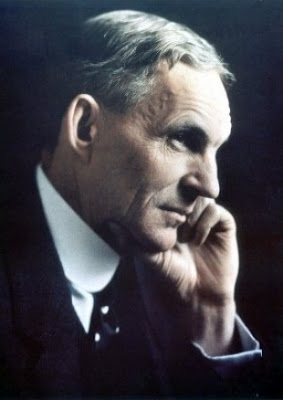
There are many great business quotes attributed to Henry Ford. In addition to the one in the headline, here’s another favorite: “Quality means doing it right when no one is looking.”

A common lament among employees-turned-entrepreneurs is that they are unaccustomed to scratching for business. They’ve left the security of a company where business development was someone else’s responsibility. Now they’re on their own, and as Henry Ford famously said, “Nothing happens until someone sells something.”

Lately I’ve found new admiration for those “pull-yourself-up-by-the-bootstraps” heroes of American business who could sell just about anything to anyone.

Oh how I wish that I had forced myself earlier in life to learn the art of selling. What great preparation that would have been for what I need to do now to grow my business.

And what an eye-opener it would be for many employees of large organizations to learn how business really comes in the door. How the success of the sales team determines the success of the entire company. How every employee, regardless of his job, should be helping to preserve existing business or working to find new business.

I don’t mean to put sales people on a pedestal. Unfortunately, there are far too many unethical ones out there who cut corners, overpromise and underdeliver.

I’m talking about the decent, hard-working guys and gals who care about their customers, consistently come through for them and always deliver superior price and service. Now that’s something to emulate.

So here are six essential rules for selling. Follow these, and I guarantee you will be successful!

  1. You have to like yourself. If you aren’t happy, if you have a bad attitude about life, you aren’t going to be able to sell anything. Period. Which leads to the corollary…
  2. You have to like your product and company. If you don’t believe in the products and services you sell, and the company you work for, how do you expect your customers to? You just can’t fake your way to the top. You absolutely have to love what you’re doing. It will show in every gesture you make and every word you utter.
  3. You have to like people. Technical prowess is no substitute for people skills. Showing respect and genuinely connecting with others is what wins clients, not glib talk or facile PowerPoint presentations.
  4. The customer is always right. I recently had a bad experience with Verizon Wireless which reminded me that poor customer service is the surest way to torpedo your company’s “good will” and tarnish its brand. Marshall Field is credited with saying the customer is always right, and I find the best sales people never fail to put their customers first.
  5. Offer solutions, not excuses. Successful sales people are the first to admit they are wrong or they don’t know the answer, but they are also the first to propose solutions and find the right answers. They never make excuses or engage in the “blame game.”
  6. Be a team player. Show me a highly successful sales person, and I’ll show you someone who is quick to give credit to others, share leads and help everyone in the company succeed. Barracudas may have killer instincts, but building lasting relationships is the key to stable growth and repeat business—and that takes everyone on the team working together.

How are your sales skills? Are you building a winning sales culture at your organization? Or are you waiting for someone else to “sell something”?

Posted in Entrepreneurship, Marketing | Tagged , , , , , | 2 Comments

In life, it’s always good to ‘test-drive’ major changes

The USA Today Money section recently ran a story advising Baby Boomers to “test-drive” retirement while they are still working. That’s good advice, I thought, and I’m living it.

Why does it seem that every retirement ad features a couple on the beach?

When I left full-time employment a year ago to start my own PR consulting firm, I didn’t view it as “pre-retirement”; but, in reality, parts of my new life are strikingly similar to a retiree’s life. So similar that some people who see me during the day just assume I’ve taken early retirement.

I work from home. I have flexible hours. I’ve carved time into my schedule to exercise, do volunteer work and write this blog. Sounds like a retiree’s life, doesn’t it?

But I still have to make money. And that’s the rub. I have to build into this “life of leisure” client visits, actual work and the time I’ve committed to professional groups like PRSA and IPRA. I’m busier these days than I was when I worked full-time!

So drawing from that USA Today article, here are some tips that I think apply not just to retirees but to anyone contemplating a career or lifestyle change:

Know your expenses – You’d be surprised how many people are clueless when it comes to budgeting. This is absolutely essential for anyone thinking about leaving the security of full-time employment to go back to school, begin a new career or start a business. I would strongly urge becoming debt-free before making a major lifestyle change. Retirees, especially, need to have enough income to last for decades.

Know your assets – This includes long-term investments, the value of your home, 401(k) plans, pension benefits, whole life insurance, etc. Younger folks like me can’t draw on retirement funds just yet, but we still need to make sure there will be enough to last when we stop working. Without the right mix of assets to rely on, your retirement may get pushed off indefinitely. And you don’t want that!

According to USA Today: “Nearly half, or 44.3%, of the oldest Baby Boomers are at risk of not having sufficient retirement resources to pay for ‘basic’ retirement expenditures, as well as uninsured health care costs, according to the Employee Benefit Research Institute.”

Know your emotional needs – We’ve all seen it, those poor souls who never seem to adjust to retirement. They are generally the workaholics who had no lives outside the office to begin with. They seem listless without work and become depressed. Make sure this doesn’t happen to you. Put some balance in your life!

Redefine retirement – People today are living longer, staying more active and are less inclined to totally stop working at age 65. So more Baby Boomers are looking for part-time jobs and making career changes later in life. I chalk up my own pursuit of an “indie” PR gig as part of that trend. I hope to build my business to the point where I can remain “semi-retired” well into my old age. Wish me luck!

Posted in Careers, Goal setting | Tagged , , , , , | Leave a comment

‘Do it now!’ or intentional vs. accidental growth

I’ve been reading selections from John Maxwell’s new e-book, “The 15 Invaluable Laws of Growth,” which hit digital book stores last week. I haven’t actually downloaded the book. Instead, I’ve been dipping into his blog, “John Maxwell on Leadership,” where he’s been teasing us with selected excerpts.

One of the “laws” I like is his admonition to shift from “accidental” growth to “intentional” growth.

“People tend to get into ruts in life,” he explains. “They get in an easy groove, and they don’t try to break out if it—even when it’s taking them in the wrong direction. After a while, they just get by. If they learn something, it’s because of a happy accident. Don’t let that happen to you!”

In case you’re wondering about the difference between accidental and intentional growth, Maxwell gives us this handy-dandy comparison to see where we stand:

Accidental Growth Intentional Growth
Plans to Start Tomorrow Insists on Starting Today
Waits for Growth to Come Takes Complete Responsibility to Grow
Learns Only From Mistakes Often Learns Before Mistakes
Depends on Good Luck Relies on Hard Work
Quits Early and Often Perseveres Long and Hard
Falls into Bad Habits Fights for Good Habits
Talks Big Follows Through
Plays it Safe Takes Risks
Thinks Like a Victim Thinks Like a Learner
Relies on Talent Relies on Character
Stops Learning after Graduation Never Stops Growing

I feel pretty good about many of the attributes in the “intentional growth” category, but the first one got me thinking. Yes, it’s true, I often put things off until tomorrow. Who doesn’t? Well, successful people don’t.

W. Clement Stone reportedly made his employees recite the phrase “do it now” again and again at the start of each workday.

Maxwell describes a seminar given in 1974 by insurance tycoon W. Clement Stone. Stressing the need for urgency in business decisions, Stone told his audience to repeat the words “do it now” 50 times every morning when they got up and 50 times at night before they went to bed. (Incidentally, this was 14 years before Nike introduced its famous “just do it” slogan.)

Some say that “structured procrastination” can be a good thing (see John Perry’s book “The Art of Procrastination”), but I don’t think Maxwell is talking about tasks on your to-do list being pushed from one day to the next. Rather, he’s talking about the stuff dreams are made of.

The word “later,” Maxwell says, “is one of those dream-killers, one of the countless obstacles we put up to derail our chances of success. The diet that starts ‘tomorrow,’ the job hunt that happens ‘eventually,’ the pursuit of the life dream that begins ‘someday’ combine with other self-imposed roadblocks and lock us on autopilot.”

Why do we put things off—big things that could make a huge difference in the quality of our lives? Complacency. Fear. Ignorance. Aversion to risk. Lack of confidence. Financial and educational barriers. These are certainly factors, but they are all obstacles that can be overcome.

I wrote last month about a panel presentation I organized of PR consultants who left the security of their full-time jobs to go independent. What made them take that chance? One of the speakers, Shawn Flaherty, talked about after all the planning she did to get ready for the plunge, she ultimately had to “take a leap of faith.”

It’s that little spark, that inner voice that says “oh, what the heck, let’s try this,” that makes all the difference in the world. At some point, successful people take chances, often big chances. It may be scary at first, but I’m beginning to see that not acting on your dreams will stunt your personal growth far more than taking a leap of faith.

Posted in Goal setting | Tagged , , , , , | 2 Comments

Rachel Carson and ‘pigtail’ light bulbs

Last week was the 50th anniversary of the publication of Rachel Carson’s “Silent Spring,” the book that many say launched the environmental movement, the creation of the Environmental Protection Agency and the first Earth Day in 1970.

The much-maligned but energy-efficient CFL, or “pigtail” light bulb.

In the early ‘70s, I was an impressionable high school student interested in science and the outdoors. I remember reading “The Environmental Handbook,” Frank Graham’s “Since Silent Spring” and “The Whole Earth Catalog.” I was spellbound by Buckminster Fuller and his geodesic domes. And I honestly believed that we should throw away all the cars (just like in the Three Dog Night song).

I also remember telling my dad that he should commute to his downtown job on a bike. Funny thing is, about 20 years later, after taking Metro for a while and then carpooling, I was driving my car into D.C. every day, too.

I now drive an Acura, hardly a boon to the environment. But I did own a Prius before that.

So this gets me to my point: why do we have such a fractured and schizophrenic view of the environment? On recycling day, we dutifully put out our recycling for pickup, but when we’re not at home, we think nothing of tossing a water bottle into a trash can.

We say we’re doing our part to save resources, then we go water the lawn or wash the car. We walk and ride bikes on weekends but drive SUVs during the week. In national polls, we say the government should better regulate pollution and greenhouse emissions, but we get upset when government mandates standards.

This past weekend, I attended a retreat where we read and discussed a book called “Hope for Creation” by Matthew Sleeth. The book made us think about leading greener lives, and I was struck by the little things I could be doing. For example, converting my light bulbs to those new “pigtail” bulbs could save four times the energy of a standard light bulb. On top of that, they are supposed to last 10 times longer.

The suggestions that got me thinking the most were in the area of gardening and lawn care. I have always admired lawns that are well-fertilized, weed-free and neatly cut. I’ve viewed flower beds as mostly for “show,” with no special ecological purpose.

My friend John Dodge, who led our retreat, made me reexamine those notions. He’s become a big advocate of growing native species and not being so fussy about the lawn. When we drove back from Richmond on Sunday, John showed me his yard in Annandale.

He got pretty excited about his native plant experiments. One bush, in particular, was teeming with insect life. Bees and bugs were buzzing all over the place. “That’s the way it’s supposed to be,” John exclaimed. Other plants had leaves that had clearly been munched on. Again, evidence that good things were happening in the garden!

I laughed and said that I always tried to kill any bugs that ate on my plants. But having some munching, I have learned, is actually the sign of a healthy ecosystem. So maybe I’ll cut down on those insecticides and fertilizer.

Rachel Carson died just two years after the publication of her watershed book. Had she lived, what would she make of today’s world? On the one hand: a growing environmental awareness and huge advances in conservation and resource management. On the other hand: perhaps far too little, too late to reverse the alarming trends she first identified in 1962. It’s hard to know how the sequel is going to turn out, but let’s hope the ending is a good one.

Posted in Purpose | Tagged , , , , , | 2 Comments

6 lessons from the journey, one year in

I spent this past weekend at Richmond Hill on a church retreat. Richmond Hill has an interesting history that lends itself to reflection and solitude. It was originally a convent for an order of nuns who prayed for reconciliation after Richmond was burned during the Civil War. Today, it’s an ecumenical Christian fellowship and residential community, still praying for metropolitan Richmond—and inviting retreatants, with the ringing of a cowbell, to join them at 7 a.m., noon and 6 p.m. for prayer services.

One of many little spots in the gardens at Richmond Hill, perfect for reflection or a quiet moment.

I found Richmond Hill, with its beautiful gardens, quiet spaces, history and views of Richmond, a peaceful oasis and conducive to contemplation. After we finished our work on Sunday—a course on “creation care” (i.e., trying to lead a simpler, “greener” life)—I strolled through the gardens, enjoying a gorgeous fall day, discovering secluded spots and many plants still in bloom.

Sitting on a bench in one of those little nooks, I began to think about my past year as a PR “indie” and blogger. It’s been a year since I left full-time employment to start a PR consulting firm. This past week also marks the one-year anniversary of The Wayward Journey.

When I started the Journey, I wasn’t sure if I had it in me to write a personal blog. As I said in my first post, “[T]his blog is part experiment as I seek to reclaim a voice for myself; part therapeutic as I work through a major career transition and attendant life changes; and—I sincerely hope—part informative and provocative for those of you who may be going through similar changes.”

A view of the Richmond Hill chapel from the garden.

In many ways, my blogging exceeded my expectations: 65 posts over 52 weeks that explored everything from career changes to putting purpose in my life. There were posts that came naturally and just poured out. With others, I struggled to find the right words to express my feelings and experiences.

And along the way, I enjoyed having followers leave me comments and give me encouragement.

What have I learned?

  1. “The unexamined life isn’t worth living. I have always liked this quote attributed to Socrates. This past year was definitely one of recharging, rethinking and retooling. I would say my blog has helped me examine my life in ways that I probably wouldn’t have done otherwise.
  2. I need to write! I’ve come to realize that blogging is like oxygen for me, so I need to figure out ways to keep it going without sapping my work time. I need to write, but I also need to achieve that ever-elusive balance in life.
  3. Simplify, simplify, simplify.” I always come back to Thoreau. I’m convinced more than ever that if you can simplify your life—reduce it down to its essence and clear away the clutter—the more effective and happier you will be.
  4. Having a purpose in life is key. I think I’m getting closer, but I am not consumed, not on fire, just yet. I think that will come, and when it does, everything else will fall into place.
  5. Relationships matter. I haven’t done the best job of maintaining and creating relationships. I tend to get wrapped up in work or preoccupied with my writing. I need to make time for people. Heaven forbid that an introvert should say that!
  6. Have a little faith. The anxiety I first felt on this journey has largely dissipated. I have discovered that I can do many things that I wasn’t sure I could do. And I have renewed my faith in a God who really does seem to watch over me.

So here’s to Year 2! May it be just as thought-provoking and challenging as Year 1.

Top posts this past year…

In case you missed these posts, here are the top five most-visited pages on my blog (based on WordPress analytics):

  1. Hard evidence that soft leadership skills matter
  2. WWSJD (What Would Steve Jobs Do)?
  3. The ‘quiet’ storm: unleashing the power of introverts
  4. Extreme career makeover
  5. Seriously, it’s okay to promote yourself

…and some of my favorites

Posted in Goal setting, Purpose | Tagged , , , , , , , | 6 Comments

Entrepreneur meets leader in Ramsey’s ‘EntreLeadership’

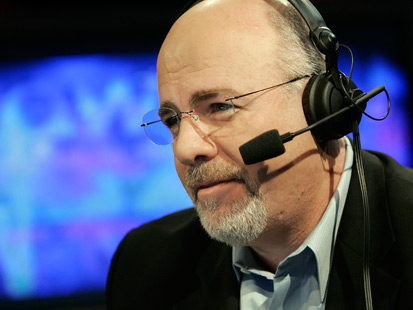
I attended a seminar last week by best-selling author and “get-out-of-debt” money expert Dave Ramsey. I was only able to sit in for part of the day, but boy did he pack a wallop into the brief time I was there.

The ubiquitous Dave Ramsey—on the air, in print and in person.

The one-day event was based on Ramsey’s book “EntreLeadership,” which discusses how the best qualities of entrepreneurship (risk-taker, driven, fearless…) and leadership (visionary, charismatic, servant…) can be combined to create successful businesses, inspire teams and develop “the art of selling by serving.”

I liked Ramsey’s no-nonsense approach and the examples he gave from his own hard-knocks business experience. The Ramsey story is one of being down and out 20 years ago—dead broke after his real estate business collapsed—and then climbing out of bankruptcy to create the financial-advice powerhouse that is The Lampo Group.

No doubt about it, Ramsey has built a very marketable personal brand that includes books, a talk radio show, classes, financial coaching, and workshops and conferences all over the country. If I could fault him for one thing, it would be that our session was a bit too commercial, with lots of promotions for upcoming events and package deals on his books. I felt at times that we were in the middle of a PBS fundraising drive.

But I digress.

I particularly liked Ramsey’s session on building teams and a culture of excellence. Ramsey’s advice makes sense, to the point that you find yourself saying, “Hey, why didn’t I think of that?”

As he says, “Great organizations create unity intentionally.” He ticked off five “enemies of unity” that I found myself agreeing with quite vigorously:

  • poor communication,
  • gossip,
  • unresolved disagreements,
  • lack of shared purpose and
  • sanctioned incompetence.

Eliminate those from your workplace, add in a big dose of passion, and you’re on your way to creating an environment that breeds champions.

In discussing how to build winning teams, he definitely towed the “tough-love” line. He described conversations with employees he has had to let go because of “bad habits.” One of his pet peeves is people who come to work late. As he put it, “I tell them that I love them and want them to stay, but their bad habit of coming in late has to go. If they can’t leave behind their bad habits, then they have to leave, too.” Gossip is another bad habit that isn’t tolerated. As he noted, “You hand your negatives up. If you have a problem with something, you come and see me.”

So often managers will bend, look the other way or “sanction incompetence” rather than face problems head on. The job of a leader, though, is to make clear to everyone what’s expected, establish the culture of the workplace and be consistent about it. “Being unclear to your employees is being unkind,” according to Ramsey. I can buy that.

Other takeaways from Ramsey that I like:

  • “Why you are doing business matters more than what or how.”
  • “You don’t have to be subservient to be a servant leader.”
  • “You cannot lead without passion.”
  • “The most successful business leaders continue to read, learn and personally grow.”
  • “People matter. Don’t treat customers like revenue units or team members like units of production.”

And, finally, one of my favorite quotes from “EntreLeadership”:

“Those who never make mistakes work for those of us who do.” – Henry Ford

Posted in Entrepreneurship, Leadership | Tagged , , , , , | 9 Comments

Exploding the boundaries of social media

There was a time—when I was working on my master’s degree—when I paid a lot of attention to “the Other” and all those post-modern concepts that preoccupied academia during the “culture wars.” I read Lacan, Derrida, Barthes, Foucault and all the lions of the post-structuralist movement.

The Social Good Summit explored how to use social media to empower those on the margins.

I learned that “hegemony” could be applied to just about any convention you wanted to puncture. I “flipped” positives, trolled the margins of class, race and gender. I did everything but wear a beret, given that the French seemed to have a lock on the movement.

Then I got a real job.

But lately, as I look at the “edges” of Facebook and LinkedIn and other social media, I think back to my graduate studies.

In an essay called “The Parergon,” Derrida deconstructs the notion of the “frame” or “edge” in a work of art, arguing that it really isn’t possible to have an absolute limit between the inside and outside. This is typical of Derrida, who was always pointing out that there is something happening in the margins if we would but see.

Why do I bring this up?

Because I am always curious, amused and at times confounded by what’s happening at the edges of Facebook and other social media. For example, have you ever really looked at the ads that “frame” the content?

Granted, I don’t see the drawing of an obese woman who wants to lose tummy weight much any more. I’ve stopped seeing the ad that told me to “stop factoring” on LinkedIn. I researched factoring and discovered it is the practice of selling uncollected accounts receivable to a third party. Now why would that always be popping up on my LinkedIn page?

You can write off these quirky little ads, but some cultural studies student is going to do a dissertation on them. Probably already has. What do they say about us? Or not say about us?

And what does it say that more people follow Lady Gaga’s Twitter account than any other person on the planet (29.6 million)?

Workshops and articles I see are filled with information on how to get more followers, engage your customers, be more efficient and cost-effective with your social media buy.

What interests me more lately, though, is how those who are largely marginalized or disenfranchised are using Twitter and Facebook. After all, social media’s promise was that everyone could have a forum. The “Occupy” movement is one such example, perhaps.

Another group I stumbled upon recently is Media on the Margins, a small organization in Australia “committed to celebrating and empowering the voices of people living on the margins of ‘mainstream’ Australian society and the global system.”

On a larger scale, I was impressed by a three-day conference that ended just yesterday called the Social Good Summit. According to organizers (which included Mashable, the United Nations Foundation and the Gates Foundation), “The most innovative technologists, influential minds and passionate activists will come together with one shared goal: to unlock the potential of new media and technology to make the world a better place, and then to translate that potential into action.”

I haven’t had a chance to look at the proceedings, but let’s hope this summit did live up to its promise and some good comes of it. Social media can definitely be a driver of change, especially in developing countries. We need to look for ways to remove boundaries and harness the power of social media in positive ways.

Posted in Marketing, Purpose | Tagged , , , , , , , | Leave a comment