The unintended consequences of change

Just before Christmas, I made a lot of changes to my 2009 Apple iMac computer. I installed new memory cards and doubled its RAM from 4 to 8GB. I upgraded the operating system to Apple’s newest Mavericks OS. I upgraded Parallels, the software that allows Mac users to run Windows. I also bought a new external hard drive to back up everything.

I was psyched. My iMac was like a brand new computer. But I soon encountered a problem: It started shutting down for no reason. I’d be merrily typing away, creating spectacular content for one of my clients, and suddenly the screen would go dark.

I’m not sure what’s making my computer crash. Maybe I made too many changes too fast. Maybe I should have tested each upgrade before moving on to the next one. Now I have a computer that is in some ways worse than what I had before!

Jets in flight

Make sure your speed of change doesn’t exceed your capacity to change.

Managing change isn’t easy. Sometimes leaders try to change their organizations too fast. They want to do everything all at once. But too much change can crash an organization, just as surely as it did my computer.

When J.C. Penney CEO Ron Johnson was ousted last year after just 17 months at the helm, the conventional wisdom was that he tried to initiate too many changes at the ailing retailer. In an article in Forbes, Bill Ackman, Penney’s principal shareholder and the driving force behind Johnson’s recruitment, admitted that, “One of the big mistakes was perhaps too much change too quickly without adequate testing on what the impact would be.” He acknowledged that Johnson’s turnaround effort had been “very close to a disaster.”

This brings to mind what I would call the first law of change:

Change can have unintended consequences.

When I was upgrading my computer, all I thought about was how fast it would run and how up-to-date it would be. It didn’t occur to me that all those upgrades might not play well together.

Observers say that Johnson failed mostly because he didn’t take the time to test the impact of his changes. He scrapped Penney’s existing business model without having a proven model ready to replace it.

Of course, there are plenty of CEOs who make big, bold changes and are hailed as heroes. And we all know that if change comes too slowly, it can result in decline, even death, for a company.

So what’s the right pace for change? Some have argued for a balanced, “Goldilocks” approach to change management: Not too much, not too little; not too fast, not too slow—just the right amount of change to fit an organization. In other words, your speed of change shouldn’t exceed your capacity for change.

Leaders must walk a fine line. If they move too fast, they risk making mistakes, alienating key stakeholders and leaving their teams behind. If they move too slowly, they miss opportunities, bleed talent and risk possible extinction at the hands of faster competitors.

What’s been your experience with leading or participating in change?

For my part, I think practicing some of the “C’s” associated with sound change management helps a lot. These include:

  • Communication
  • Collaboration
  • Compassion
  • Commitment
  • Choice
  • Community/Common purpose
  • Critical thinking

Critical thinking is definitely a key one. If I had thought through my computer upgrades a little more carefully, I might have avoided those random crashes. Instead, I find myself clicking the save button and keeping my fingers crossed.

Posted in Leadership, Management | Tagged , , , , | 2 Comments

Ut prosim, Virginia Tech and fall commencement

Virginia Tech

“That I may serve.” Image from virginiatech.tumblr.com.

There I was, a U.Va. graduate, in the heart of the Hokie Nation, watching my son receive his undergraduate degree in construction engineering from Virginia Tech. Putting aside all of the jokes we U.Va. grads make about Hokies being farmers (Tech, after all, is Virginia’s land grant “aggie” school), I was darn proud of Patrick.

It was an unseasonably warm day for the Dec. 20 commencement ceremony, held inside Cassell Coliseum. As we stood around outside afterwards enjoying the sun and taking pictures, a number of thoughts went through my head.

Mostly I thought about how far Pat has come in the last 10 years. Back in 2003, when he bowed out after a year and a half at the Berklee College of Music in Boston, he was bitter about school and directionless. He said going to college was a waste of time, and he would never go back. As he drifted, I worried about his prospects. I fretted, like any father would, about where he would end up.

Working in construction, though, showed him the value of hard work and that a degree might be necessary to get ahead. He started taking classes part-time at Northern Virginia Community College; then he transferred to Tech full-time about two years ago. Now, at the age of 30, he has his degree.

But he didn’t just get a degree. He approached school with a purpose and discipline that was missing the first time around. And it paid off. He graduated magna cum laude and received an academic award that assured him a spot in Tech’s nationally ranked graduate engineering program. He’s already on track to get his master’s degree at the end of next year.

One of the graduation speakers reminded us that commencement means beginning. I guess like most people, I have always thought of the commencement ceremony as a capstone, a time for congratulations and attaboys. How appropriate, I thought, to also view it as the start of something new and exciting—so many doors are now open to Pat that before were closed or only slightly ajar.

Another commencement speaker urged the audience to not just accept change, but to embrace and influence it. “Invent the future,” he said, which is Virginia Tech’s slogan. Everywhere you turned, embroidered on the gown of every graduate, was the school’s Latin motto, Ut Prosim: “That I may serve.” Combine inventing the future with serving others, and you have a pretty good action plan for life.

So I couldn’t be more impressed with this latest engineering grad from Tech. May he serve with distinction!

Posted in Careers, Purpose | Tagged , , , , | 4 Comments

Giving thanks for the things I don’t have

Walking through my house after being gone for four months, I was struck by what I hadn’t missed while I was away. I didn’t miss my belongings or the furniture or even the neighborhood. Within a day, though, I was back to worrying about this or that. I had my list of chores—clean the humidifier, replace the furnace filter, unpack some things I had stored in the basement.

Father Christmas

It’s the most wonderful time of the year — I think.

I had vowed not to get caught up again in being a property owner; yet, here I was on the phone with my insurance company trying reinstate my homeowners policy, which I had replaced with landlord insurance during the time I rented my house. Unfortunately, I couldn’t just restart the old policy. The agent said I had to buy a new one, and that meant answering a bunch of questions about the property. I could feel those old ownership juices flowing again.

It didn’t help that I moved back into the house just before Thanksgiving—the kickoff of the Christmas shopping season, when the urge to buy, get and own things reaches its zenith. It’s a strange time of the year, with conflicting messages and feelings. It seems that two very disparate themes have evolved over the years and are now awkwardly intertwined like mismatched dance partners: One gyrates to the frenetic beat of “buy, buy, buy”; the other grooves to the good news of Christ’s coming and the possibility of peace on Earth.

There are occasional points of intersection, those times when we acknowledge the “true meaning of Christmas.” But is that just sentimentalism, a Hallmark moment? Or is it truly the humbling and sublime experience that the virgin birth conveys?

Each year, I think about setting my priorities straight. Then come those guilty pangs of “maybe I didn’t spend enough on gifts” or “what if someone I didn’t buy for gives me something?” What joy is there in that?

Next year will be different, I say…and so now “next year” is here, and I feel those same old expectations tugging at me. Will I give in to them, or will this be the year of change? And what exactly is change? A trip to someplace warm to escape everything? Shopping earlier so that I can enjoy Christmas Day?

At church, we are encouraging our congregation to engage in “alternative giving.” The idea is to make a donation to one of several causes we’ve identified (housing the homeless, stopping human trafficking, etc.) on behalf of someone else. Make that your gift rather than spending money on another tie or scarf that no one really needs.

That’s a good start to changing the dynamic of the season. I think about my house and being in it this Christmas but also wanting to refrain from feeling too invested in it. Not getting caught up in the trappings of ownership, the acquisition of things. I want to continue to downsize, to give away what I don’t need or never use. To simplify my life to the point where I really can focus on what is important. It may sound strange, but I want to give thanks and celebrate what I don’t have and what I haven’t really missed these last few months. That’s my holiday wish.

Posted in Purpose | Tagged , , , | Leave a comment

The bald truth about power and leadership potential

In the mornings lately, when I take a shower and dry my hair, I’ve noticed a little thinning on top. Uh-oh.

My hair has always been what shampoo makers call “fine,” but nowadays it seems to be even finer—so fine as to be nearly invisible. So what’s going on here? Is this the beginning of the…end?

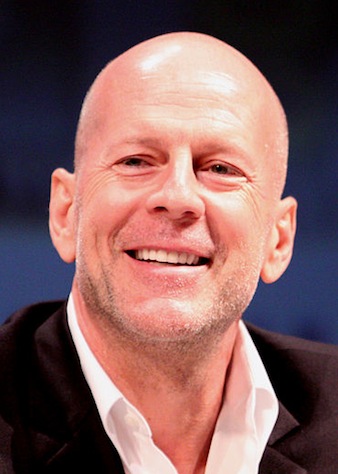
Bruce Willis

Remember the show “Moonlighting”? Bruce Willis had hair then. Photo by Gage Skidmore from Wikimedia Commons.

I’m not sure, but I’ve discovered that if I comb my hair across the top of my head, you can’t really tell. It’s ingenious, really. I call it the comb-over. To my knowledge, no one has ever thought of this. No one in the history of mankind has ever employed such a brilliant subterfuge. I’m thinking of patenting it.

Okay, just kidding.

I’m beginning to understand, though, why otherwise rational men resort to comb-overs. Sure, bald is in, sort of, but I’m no Bruce Willis or Dwayne Johnson. Although, what choice do I have when the inevitable happens—unless I use the patented comb-over or go for a toupee? Well, I could just shave my head now and be done with it. I could be another Seth Godin!

You laugh, but The Wall Street Journal reported last year that “[m]en with shaved heads are perceived to be more masculine, dominant and, in some cases, to have greater leadership potential than those with longer locks or with thinning hair, according to a recent study out of the University of Pennsylvania’s Wharton School.”

In fact, Godin is even quoted in the article: “I’m not saying that shaving your head makes you successful, but it starts the conversation that you’ve done something active. These are people who decide to own what they have, as opposed to trying to pretend to be something else.” Okay, Seth, score one for authenticity.

Wharton management lecturer Albert Mannes conducted experiments to test people’s perceptions of men with shaved heads vs. those with hair. Subjects reported finding men with shaved heads as more dominant, taller and 13 percent stronger. Wow!

Seth Godin

Marketer Seth Godin. Photo by Joi Ito/Wikimedia.

Mannes speculates that head shavers seem more powerful because the look is associated with masculine images such as the military, professional athletes and Hollywood action heroes. Male-pattern baldness, by contrast, is associated with George Costanza from “Seinfeld.”

Indeed, the study found that men with thinning hair were viewed as the least attractive and powerful. “For these men, the solution could be as cheap and simple as a shave,” says the Journal. Ha, ha, ha. That really hurts.

For now, I have hair. It’s just not a full mop. It’s like a Chia Pet that’s lost its luster. A broom that’s missing some of its bristles. A thinning patch of grass that needs a little bit of TLC. I’ll manage for the time being. I’m not quite ready for the sheared look. Although, I did shave off my mustache a few years ago. Hmm…

Posted in Happiness, Leadership | Tagged , , , , , , , | 4 Comments

The magic of great branding

Who can explain why an Apple customer is willing to stand in line for hours for a new iPhone or why coffee drinkers will drive miles out of their way to find a Starbucks?

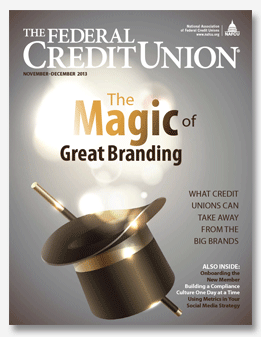
The Federal Credit Union magazineIt’s the magic of great branding.

In an article I wrote for the November-December issue of The Federal Credit Union magazine, I take a look at what the big, iconic brands can teach credit unions.

If you have a few minutes, I highly recommend that you give it a read because the observations I gleaned from talking to branding experts apply to any organization trying to differentiate itself in the marketplace.

Here are six quick takeaways from one of the experts I interviewed, Daryl Travis, CEO of Brandtrust Inc. Brandtrust is a Chicago-based research and consulting firm that has helped America’s top companies better understand their customers and brand themselves. Travis also has a new book out called “How Does It Make You Feel? Why Emotion Wins the Battle of the Brands.”

1. Brands are about feelings and not facts. With the advent of social psychology and behavioral economics, we understand so much more about why people make decisions, and we see more and more that they are driven by feelings. If you look at the customer experience from end to end, there may be hundreds of touch points, but our brains can only remember the ones that are the most emotionally intense. Those are the touch points that matter; they create the narrative or the mental model for processing how a brand makes us feel. That’s what the iconic brands understand.

2. Branding is the most powerful, yet most misunderstood, business strategy. There is nothing to explain the success of companies that sell commoditized products like coffee (Starbucks) or shoes (Zappos) beyond the power of their brand.

3. The brand is not part of the business; it is the business. How well an organization makes good on its brand promise—that’s what it’s all about.

4. The little things you do are more important than the big things you say. In personal service, it’s always about human interaction. How well is your staff attuned to what’s really going on with your customer? Are they thinking about what’s happening in their organization or what’s happening in their customer’s life? That’s what really makes a difference.

5. Every brand tells a story. How will yours be told? The essence of all human communication is story. That’s how humans learn. If you want people to pay attention to you, don’t give them a list of bullet points or features and benefits. Tell them a story. Tell them a story about what your organization stands for, why it means something to them and how it will help them in their own life.

6. There are brand ideals. Brands need to stand for something important. You have to ask yourself, “How would an organization that makes these kinds of promises behave?” Then it starts to become very clear what you need to do for product development, customer service and creating an experience where that brand promise comes true every day so that people feel it. Once people start to feel it, they will become engaged with the brand, and they will become loyal to the brand.

PRSA-NCC blog and board

I had an opportunity to post on the PRSA-NCC blog this week on “The future of America’s newspapers.” Similar to my post last week on The Wayward Journey, this one has more information from the Pew Research Center on the state of America’s news media.

I also want to thank everyone who voted for me in the recent PRSA-NCC elections. I have had the privilege of serving on the NCC board these past two years; now, I will have the privilege of serving as a vice president. I look forward to being a part of next year’s leadership team!

Posted in Marketing | Tagged , , , , , , | Leave a comment

The ‘incidental reader’ and the future of newspapers

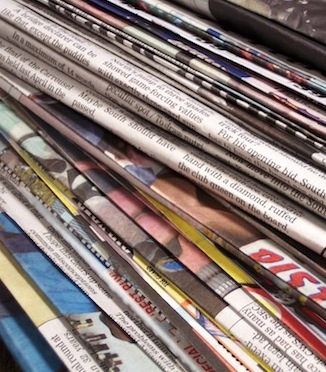
Newspapers

Will newspapers survive the digital age?

Last week, I attended a very informative PRSA-NCC 20+ LeaderPack luncheon organized by D.C. PR pros Jeff Ghannam and Tracy Schario. Kudos to both of them for putting on a great event and especially to Tracy for recruiting her colleague at the Pew Research Center, Amy Mitchell, to speak to us about the future of newspapers.

A lot of us PR folks are ex-journalists, so we have a keen interest in the health of our former profession. I started out as a community newspaper reporter in Franklin, Va., a place not unlike Frank Capra’s Bedford Falls or Andy Griffith’s Mayberry. I wrote everything from farm news to full-length feature stories. One day I was at a store grand opening; the next day I was covering a school board meeting. It was incredible experience for a newly minted college graduate.

Until about six or seven years ago, I harbored this fantasy that I would one day sell the house, cash in my 401(k) plan and buy a small newspaper. I would escape the rat race of D.C. and go back to the idyllic lifestyle of the small-town newspaperman.

I don’t have that fantasy any more. Newspapers aren’t doing very well, and reporters and editors are losing their jobs in droves.

So I listened intently as Amy, who oversees Pew’s Journalism Project, shared her insights on the current media landscape. Amid the glum news of stagnant advertising revenue and failure to change fast enough to compete in the digital era, there appears to be a glimmer of hope for newspapers.

First, the bad news:

  • Print advertising revenue continues to fall.
  • For every $1 gained in digital advertising, newspapers lose $16 in print advertising.
  • 72% of total digital mobile display advertising goes to just six companies, and none of them are traditional media companies.

Now, some good news:

  • Tablet and smartphone owners are using these devices to read news! Nearly two-thirds say they get news this way weekly.
  • 78% of tablet users read more than one in-depth article in a sitting.
  • 72% of tablet users read an in-depth article that they were not initially looking for.

Imagine, people reading for the sake of reading! Pew calls it an “incidental reader revival.” I’m all for that. Newspapers have also had some success in charging for content (so-called paywalls) and earning income from other sources such as consulting, conferences, delivery services and packaging their content for technology companies.

Amy noted that for the first time, The New York Times has more circulation revenue than advertising revenue. The Times has worked hard to win readers to its mobile platform, and it was one of the first newspapers to institute a digital pay plan.

Here in D.C., all eyes are on The Washington Post and what changes Amazon.com founder and CEO Jeff Bezos has in store for this struggling institution. Odds are, he will use his considerable technology and business acumen to transform the Post into a new kind of media company, one more focused on providing a service and less concerned about producing a product.

It will be interesting to see what happens. Although I no longer subscribe to a newspaper at home, I still enjoy picking one up and reading through it. It reminds me of the good old days of picas, points and printing presses. You remember those things, right?

Posted in Communications | Tagged , , , , , , , , | 2 Comments

A blogger’s lament: ‘You were always on my mind’

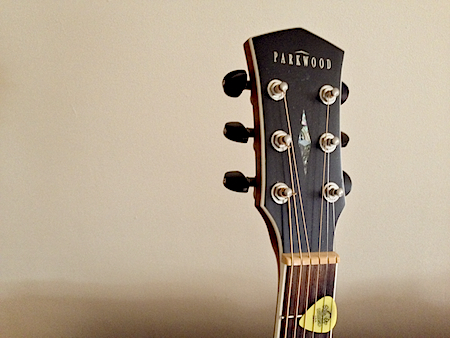
Guitar

No, this is not Willie Nelson’s famous “Trigger.” It’ my own “Parker.”

I’m not a huge fan of country music, but I do like Willie Nelson. Maybe it’s because Willie has recorded so many great songs in a style that doesn’t strike me as excessively country. In particular, I like his version of “Always On My Mind,” also recorded by Brenda Lee, Elvis and many others over the years, including the Pet Shop Boys.

If you’re a blogger, you can’t go wrong studying the lyrics to this song. It’s as if the singer is lamenting not so much a lost love, but his poor, lonely blog—how he should have done more to keep his readers satisfied.

Actually, the song’s lyrics apply to just about anyone who is in the business of satisfying customers, members, constituents or shareholders. So here’s some good relationship advice, courtesy of Johnny Christopher, Mark James and Wayne Carson, the song’s composers:

You were always on my mind.” If the song’s refrain isn’t your refrain, too, you are going to be in a heap of trouble fast. Your readers (and customers) must always come first.

Keeping your readers top-of-mind means constantly thinking of new topics they may be interested in. Get in the habit of writing down ideas or experiences from your life that you can share. A blog shouldn’t be an afterthought or an addendum; it’s the real deal—an extension of your personality or business culture. When you put yourself into your blog, it shines through and people respond.

I’ve written previously about the importance of giving yourself plenty of “white space” for creative brainstorming. (See “4 fears you need to eliminate to become more creative.”) I use the Notes feature on my iPhone to write down ideas when I’m on the go. I also use a free program called Pocket to save articles and blogs I see that I might want to refer to later. Pocket also comes as an app that you can view on your smartphone. I recommend giving it a try.

Little things I should have said and done, I just never took the time.” There are innumerable little things that make for a good blog. The first one is to treat your readers (and customers) right. Don’t bore them with reposted technical bulletins or press releases; don’t patronize them with sales come-ons; and don’t lecture them. Treat them as equals, and engage them in a lively conversation. And for gosh sakes, turn on the comment feature so people can leave comments. Then remember to reply to each one (in a timely fashion).

Do sweat the details when it comes to style, usage and grammar. If someone takes the time to read your blog, at least give them a good read! Ditto when it comes to design. You don’t have to have a professionally designed blog, but at least make it presentable and easy to navigate.

Do consider search engine optimization. Remember to use categories and tags so folks will land on your blog when searching for your key words.

Maybe I didn’t love you quite as often as I could have.” Here is where I often fall short. The surest way to increase readership and develop a following is to consistently post good content and to keep a schedule.

Girl, I’m sorry I was blind.” If you make a mistake, don’t be afraid to apologize. We’re all human.

I guess I never told you that I’m so happy that you’re mine.” Good bloggers make you feel welcome and always reply to comments. They appreciate your stopping by. This is why blogs fall under the category of social media. So don’t forget the social part, and always keep your readers on your mind.

Posted in Communications | Tagged , , , , , , , | Leave a comment

Note to self: write a personal branding statement (now)

Is it asking too much to expect a high school student to know what career she wants to pursue? Probably.

Okay, what about an adult? Shouldn’t adults know what they want out of life? What path they want to follow? Who they are? Hmm…let me get back to you on that.

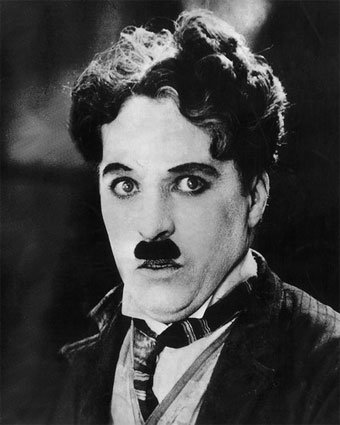
Charlie Chaplin

Is this you when asked to talk about yourself or firm?

When I was in high school, my friend Dave was certain he wanted to be a doctor. “How do you know?” I would ask. I was clueless as to what I wanted to be when I grew up, although even then I gravitated towards the humanities.

Dave and I both went to the University of Virginia, where he became pre-med and I settled on English as a major. I lost track of Dave after graduation, but I found out later that he had become an anesthesiologist. “So he is a doctor,” I thought, and it made perfect sense that he had gone into anesthesiology because Dave was never much of a people person. I could see him in an operating room quietly administering anesthesia, never having to interact with a patient.

But most of us aren’t like Dave. In fact, many of us, as we approach the mid-life crisis point of our lives, are just as clueless as we were in our youth about our future path. Just as vague and uncertain about who we are and what the heck we’re doing here.

I was thinking about that last week during an excellent “train-the-trainer” session by Chryssa Zizos of Live Wire Media Relations at the October Independent Public Relations Alliance luncheon. Chryssa, a top D.C. media strategist, was giving pointers to a group of us that do media training and message development for clients.

I liked the way that she cut to the chase and said:

Good messaging boils down to just three things:

1. Who are you?
2. What are you doing?
3. Why are you doing it?

If your client can answer those three questions in an interesting, informative way, then they will do well in an interview.

It’s the classic elevator speech, the 15-second sound byte, the personal branding statement that I have counseled clients to rehearse for interviews, networking functions and, yes, the proverbial elevator ride. It’s the response to that most basic of questions, “So tell me, what do you do?”

Yet, it’s the hardest question for most people to answer. Even professionals have difficulty coming up with a succinct response. When Chryssa invited volunteers from the audience to role-play with her, as if they were on-camera, most were hard-pressed to come up with a decent answer.

Sitting there, watching my colleagues squirm, and knowing that I, too, didn’t have an answer that would be very compelling to a reporter, I vowed once again (for, what, the 100th time?) to write my own personal branding statement.

After all, I’ve coached other people to write statements. Why can’t I put pen to paper and come up with my own?

As Chryssa advised us, it’s not enough to simply describe what you do. You need to be able to explain what sets you apart, makes you unique or the best in your field. In short, what’s different about you and your firm, and why should anyone care?

So that’s my homework. I’ll let you know when I finish the assignment!

Posted in Careers, Communications, Marketing | Tagged , , , , , , | 2 Comments

Signs we’re going to have a harsh winter

This week I had a meeting downtown, which meant I had to dress up for a change. As I peered into the closet, I spied two nearly identical dark-blue slacks—one size 34 and the other size 36. I’m an optimist, so I stepped into the 34, confident that I could zip it up. But, alas, it was too tight. Well, I’ll just have to super-size it, I thought.

You may think I had to switch pants because I haven’t exercised or because I cannot help myself when it comes to chocolate-chip cookies, brownies and cake. No, it’s not that at all. It’s that we’re going to have a very severe winter this year, and my body is getting ready for it.

My body knows it’s going to be brutally cold and that it needs an extra layer of insulation. So I’m really being proactive by gaining weight.

Snow storms

Remember the big snow storms in 2010?

A month or so ago, news stories began appearing about predictions of a harsh winter. Both the Farmer’s Almanac and the Old Farmer’s Almanac are predicting colder-than-average temperatures and greater snowfall. The Farmer’s Almanac says there will be a huge storm just in time for the Super Bowl in February.

Usually, it’s still pretty nice around here at Thanksgiving, but the Farmer’s Almanac says we’re due for a wintry mix of snow, rain and sleet. Wonderful.

One often-noted sign of a hard winter is an abundance of acorns and squirrels gathering them early. Debbie has a huge oak tree in her backyard, and it has been raining down acorns for weeks now. Some days it seems like we’re under attack as these little bombs zip past our ears.

We’ve also had some strange disturbances in the yard. In the mornings, we’ve noticed that critters have been whooping it up at night, literally tearing up the rug. Dozens of divot-size chunks of turf have been uprooted. Neighbors have said they’ve seen raccoons and foxes in their yards. Could it be one of these animals on a nocturnal binge?

No, said the lawn-service man who was called in for consultation—it’s just squirrels burying acorns. I remain dubious. I’ve never known squirrels to tear up soil quite that badly. We must be in for one heck of a winter!

The Almanac people also say that fat and fuzzy caterpillars are a sign of bitter, cold weather; and a narrow orange band in the middle of the woolly bear caterpillar means there will be heavy snow. Okay, I’ll be sure to look for those.

After our last divot disaster, I went out and bought some mothballs. We read that they are good at warding off critters because the smell is so bad. You sprinkle them in your garden or yard, and pests will supposedly flee to an odor-free environment.

So the other night, after getting home late, I went out in the backyard with a flashlight and sprinkled mothballs in the places where we’ve had the most divot activity.

The beam of light would occasionally reflect the white of the mothballs like the first flakes of snow landing on grass. A little chill came over me. I’m not ready for snow just yet, I thought, as I walked across the yard in my shorts and sandals. After all, it’s been in the 80s this week!

P.S. So far, the mothballs have worked. Knock on oak.

Posted in Happiness | Tagged , , , , , , | 2 Comments